What The Service Covers
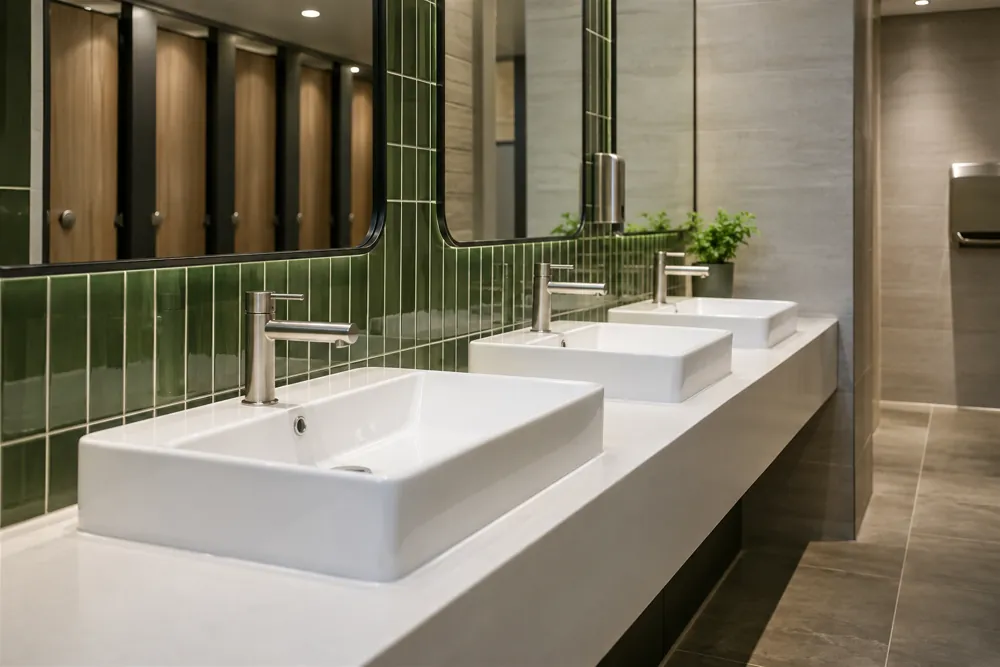
A washroom schedule should cover toilets, urinals, basins, taps, cubicles, door furniture and floors. Soap, paper supplies and dispensers need an agreed checking routine, while scale removal and detailed grout cleaning usually require a separate periodic task.
The work begins with an agreed list rather than an assumption that every visible item is included. Tell us about sensitive finishes, items that must not be moved and any surfaces where a manufacturer’s cleaning instructions apply.
Tasks To Put In The Specification
- Separate washroom equipment from kitchen and general cleaning tools
- Clean fixtures using products compatible with the surface finish
- Attend to door handles, flush controls and other touchpoints
- Check agreed soap and paper stock without overfilling dispensers
- Report leaks, damaged fittings and persistent drainage odours
Bad odours do not always come from a dirty surface. Drainage faults, dry traps, leaks and defective ventilation need investigation by the responsible maintenance team, so cleaning reports should distinguish an observed defect from a problem cleaning can reasonably resolve.
When To Review Your Cleaning
Frequent stock shortages, visible scale and repeated odour complaints are signs to review the specification. Busy visitor washrooms may need checks during opening hours, while a lightly used staff facility may suit a different frequency agreed through the site assessment.
Cleaning should move from cleaner surfaces towards more contaminated fixtures, with separate cloths and suitable changes between tasks. Products must be used at their stated dilution and contact time, and incompatible chemicals must never be combined in a toilet or drain.
Safety And Relevant Requirements
The cleaning method must protect people using the premises as well as those doing the work. The HSE cleaning guidance on slips explains why timing, floor drying and keeping people away from wet areas need attention.
The Control of Substances Hazardous to Health Regulations 2002 apply where hazardous substances create exposure risks. Use product information to assess the task, select suitable controls and agree secure storage, rather than treating a safety data sheet as a complete risk assessment.
Sanitary bins and other collected wastes need explicit arrangements with an appropriately authorised provider. Do not assume emptying general office bins includes sanitary waste removal, and check that transfer documentation and collection responsibilities are agreed where applicable.
From Initial Scope To Handover
- Describe the setting. Share the building use, postcode, access times and known problems, with photographs where useful.
- Assess the method. Agree surfaces, equipment, supplies and any restrictions before committing to the work.
- Confirm the scope. Check the task list, frequency, exclusions and responsibilities in the quotation.
- Check the result. Review the agreed areas and record inaccessible tasks, damage or changes needing a further decision.
What Affects The Cost
Fixture numbers, footfall, opening hours and stock responsibility drive the scope. Specialist consumables, periodic descaling and waste collections can affect the overall cost, so ask which items are included in the cleaning quote and which are supplied under another arrangement.
Ask the quote to separate recurring tasks from periodic work. A useful comparison includes the same frequency and materials, and explains how additional tasks will be authorised before they are charged.
Information To Share Before Work Starts
A safe, productive visit depends on the practical details being agreed beforehand. Provide the cleaning window, a contact for access problems and any restrictions on water, power or equipment storage.
Explain how defects are reported and who can approve extra work. If the condition found on arrival differs from the original description, the scope should be reviewed before a different method or additional task is attempted.
For the wider service and related cleaning options, see commercial cleaning Glasgow. You can also check the areas covered or send the details for a quote.
Cleaning Questions, Answered
Are Washroom Consumables Included?
Washroom consumables are included only where the quotation says so and identifies the products and supply arrangement. Some businesses supply their own soap and paper while cleaners check and replenish dispensers from stored stock. Agree who orders replacements, where stock is kept and how shortages are reported so replenishment does not depend on guesswork.
How Is The Cleaning Scope Confirmed?
The cleaning scope is confirmed by agreeing the areas, tasks, access and expected result before work is scheduled. Supply photographs or arrange an assessment where the condition is unclear. Check the written quotation for exclusions and periodic tasks, and ask how changes will be approved if the site conditions differ from the original description.
What If A Surface Is Already Damaged?
A damaged surface should be identified before cleaning begins, especially where cracks, loose finishes or worn coatings could affect the method. Cleaning cannot repair an underlying defect or promise to remove permanent staining. Record the condition, agree any test area and discuss whether maintenance work is needed before a treatment can proceed safely.